The Hidden Career Path: Breaking Into DAM from Creative Operations
You've been doing Digital Asset Management work for years, but your resume just doesn't show it. Here's how to translate your Creative Ops experience into DAM career opportunities and land digital asset management roles.
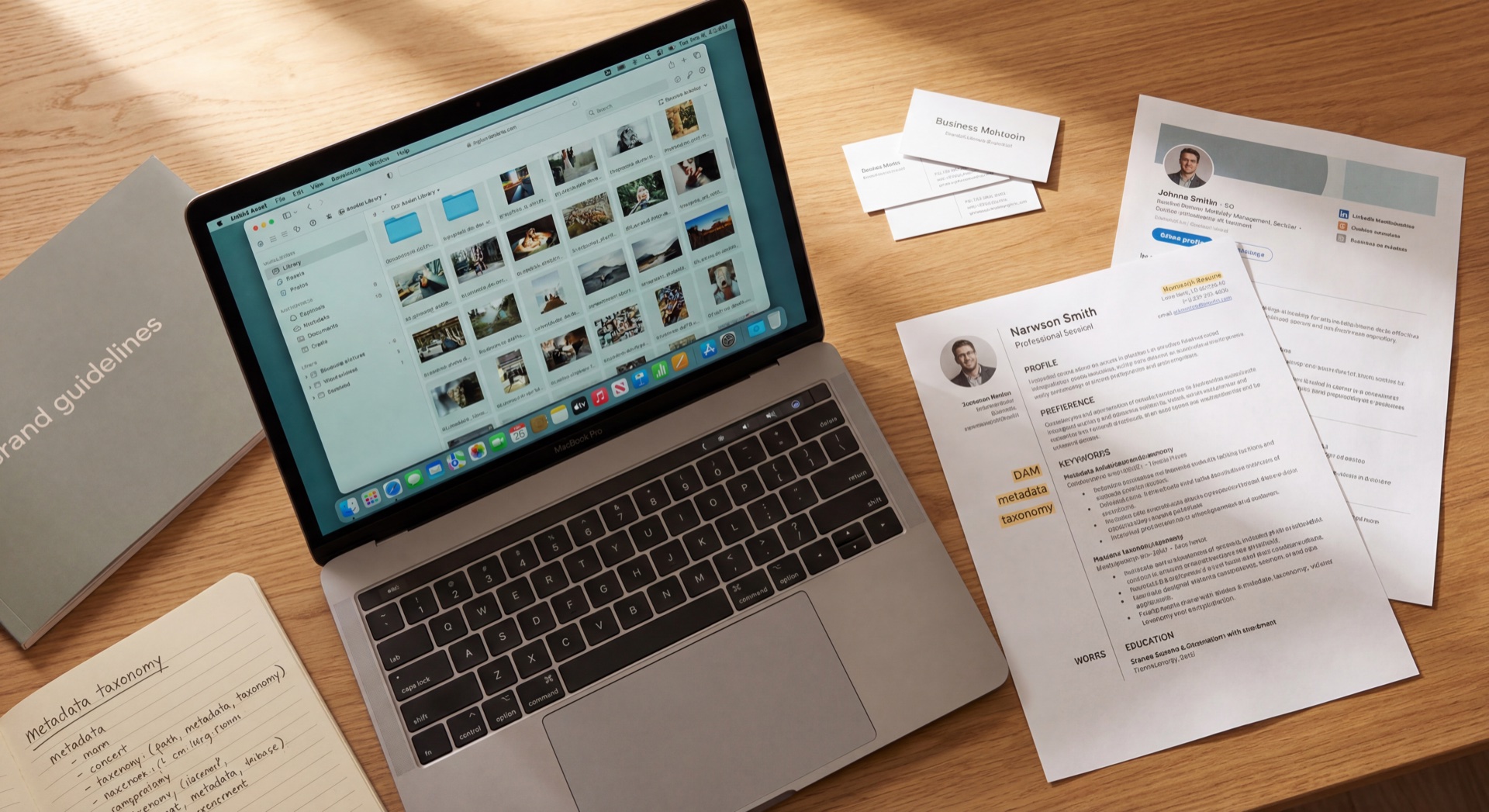
I spoke with a Creative Operations professional recently who had a problem that's frustratingly common: eight years of experience, spending 50% of their time managing digital assets, organizing workflows, training teams on file structures. But when they applied for Digital Asset Management (DAM) roles? Crickets.
The issue isn't experience. It's translation. Making the DAM career transition from Creative Ops is one of the most natural moves in the industry, but hiring systems don't recognize it. Applicant tracking systems scan for the word "DAM" in your job title, not in your actual day-to-day work. So you end up invisible to the very roles you're already qualified for.
If you've been organizing creative chaos into searchable systems, you're already doing DAM work. You just need to position it that way.
Why This DAM Career Path Makes Sense
Creative Operations professionals don't just touch DAM work occasionally. They live in it. You're the person who built the folder structure everyone actually uses. You wrote the file naming convention that (mostly) stuck. You trained the new hires on where to find assets and why metadata matters.
Your daily work includes:
- Asset organization across platforms
- Metadata tagging and taxonomy development
- Workflow design for creative review and approvals
- Stakeholder training on asset retrieval
- System administration for creative tools
The gap? Your job title says "Creative Coordinator" or "Brand Operations Manager," not "DAM Administrator." So when a recruiter searches for candidates, you don't show up, even though you're doing the work at a DAM Manager level.
I've worked with professionals who made this exact transition: photographer to retoucher to asset manager. Each role built on the previous one, adding workflow thinking and stakeholder management to technical skills. That's the real insight here: DAM jobs require systems thinking and people skills, not just platform expertise. If you've ever convinced a team to change how they work, you've got the hardest part down.
How to Optimize Your Resume for DAM Jobs
Applicant tracking systems are blunt instruments. They filter for "DAM" in job titles and experience descriptions, which means your actual skills get buried under the wrong vocabulary.
This isn't embellishment. It's translation. Here's how to reframe your experience using DAM terminology:
Before: "Managed creative asset library for marketing team"
After: "Administered digital asset management system supporting 50+ users across three departments"
Before: "Built folder structures and file naming conventions"
After: "Designed and implemented taxonomy architecture and metadata standards"
Before: "Trained team on where to find files"
After: "Developed and enforced governance policies for asset retrieval and reuse"
Notice the shift? Same work, different framing. The key is leading with outcomes, not tasks. Don't say you "organized files." Instead, say you "reduced asset retrieval time by 40% through improved metadata tagging."
On LinkedIn, add "Digital Asset Management" to your skills section even if it wasn't your official title. Keywords matter for recruiter searches, and if you've done the work, you've earned the skill tag.
Here's a side-by-side example:
Old job description:
Coordinated creative requests and maintained asset library in Dropbox. Created folders and trained team on file naming.
New job description:
Administered digital asset management workflow for creative operations team. Designed taxonomy structure supporting 10,000+ assets, reducing retrieval time by 35%. Developed metadata standards and conducted user training for cross-functional stakeholders.
Same job. Completely different keyword footprint for DAM career searches.
Essential Technical Skills for Digital Asset Management Careers
Once your resume clears ATS filters, what technical skills do hiring managers actually look for?
There's a persistent myth that you need Python or SQL to break into DAM. Let's clear that up: most DAM roles don't require coding. It helps for senior positions, especially if you're integrating systems or building custom workflows, but it's not a barrier to entry.
What hiring managers actually want:
Understanding of metadata schemas and controlled vocabularies. Can you design a tagging system that makes sense to both creative teams and legal departments?
Real example: Understanding metadata schemas means you can design a tagging system where "campaign" means the same thing to creative teams, marketing ops, and legal, even though they use the term differently. You create the structure that lets all three departments find what they need without stepping on each other's toes.
Experience with DAM platforms. Frontify, Bynder, Adobe Experience Manager, Widen, even well-organized Dropbox or Google Drive setups count. You don't need certifications; you need to show you've solved real problems.
Workflow mapping and process documentation skills. Can you take a messy creative review process and design something clearer?
Change management and user adoption expertise. Have you ever rolled out a new system and actually gotten people to use it?
Technical nice-to-haves include API basics, light scripting, and familiarity with integrations (connecting your DAM to creative tools, CMS platforms, etc.). But these are bonuses, not requirements.
The best DAM professionals think in systems, not syntax. If you can map a workflow on a whiteboard and explain why it's better than the current chaos, you're already ahead.
The Reality of DAM Jobs (Contract vs Permanent)
Let's be honest: DAM work skews toward contract roles. I've heard this from multiple professionals making this transition: "It's not stable, mostly contract roles." That's real.
Why? Because a lot of DAM work is project-based:
- Organizations hire for migrations (moving from one platform to another)
- Implementation projects have clear start and end dates
- Companies scale up for the rollout, then scale down for maintenance
DAM is a growing field, but it's still niche enough that many companies don't justify full-time permanent headcount.
That said, permanent DAM jobs do exist. You'll find them at:
Large enterprises with mature DAM programs. Fortune 500 brands that treat DAM as critical infrastructure (think Nike, Coca-Cola, major media companies)
Agencies and consultancies. Places like Starbright Lab, where DAM work is part of the core service offering
SaaS DAM vendors. Frontify, Bynder, Widen, and similar platforms hire DAM professionals for customer success, implementation, and consulting roles
If you're early in your digital asset management career, consider the contract-to-permanent strategy: accept a six-month contract role, prove your value during implementation, then negotiate conversion to full-time. I've seen this work repeatedly. Someone takes a Frontify implementation contract, delivers a successful rollout, and gets hired permanently because the organization realizes they need ongoing DAM expertise.
This contract-to-conversion path is exactly how many DAM professionals build careers. At Starbright, we've seen it work repeatedly, which is why we hire for thinking rather than titles.
How Starbright Thinks About DAM Hiring
When we evaluate DAM candidates, we ask:
- Can you map a messy workflow and design a better one?
- Can you explain metadata strategy to a non-technical stakeholder?
- Have you ever convinced a team to change how they work?
One of our best hires had zero "DAM" on their resume. But they'd designed a Dropbox structure that scaled to 50,000 assets, with a tagging system that actually worked across departments. That's DAM work. The credential doesn't matter. The work does.
If you've organized creative chaos into searchable systems, you're doing DAM. The next step is just positioning yourself so hiring managers can see it.
Make Your Creative Ops Experience Work
The work you're doing already qualifies. The experience you're gaining matters. And the career path from Creative Operations into Digital Asset Management? It's real, it's viable, and companies need people who can think in systems while keeping humans in mind.
Here are four things to do this week:
Rewrite one job description on your resume using DAM terminology. Focus on outcomes: reduced retrieval time, improved metadata compliance, user adoption rates.
Add "Digital Asset Management" to your LinkedIn skills. Make yourself searchable.
Join DAM community groups. Reddit's r/DAM, industry Slack channels, the DAM LA conference. These are where the real conversations (and job leads) happen.
Consider contract roles as a foot in the door. A six-month implementation project can turn into a permanent position if you deliver.
If you're navigating this transition and want honest advice, reach out. We've helped people make this exact career shift, and we know what actually works versus what sounds good in a LinkedIn post.
Now make sure the right people can see it.
Carl
Technical insights and thought leadership on Creative Operations, DAM migrations, and AI-powered metadata management from Starbright Lab.